What we Learned at TEDxIndianapolis’ “Generosity for a New Era” Salon
Charitable Advisors Joins Central Indiana Community Foundation
How can we spark generosity in our own lives and throughout our region?
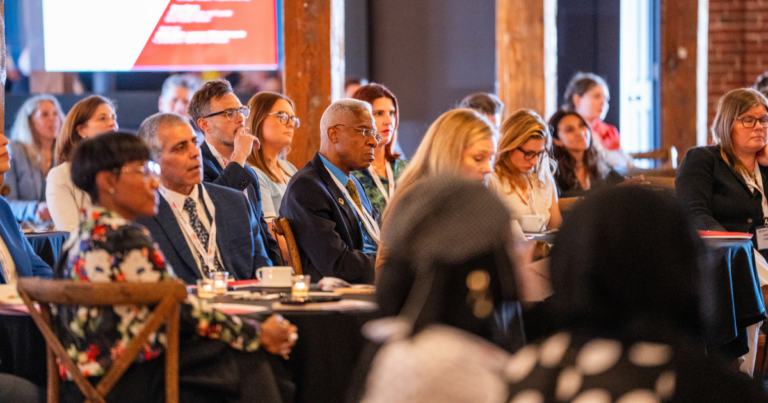
That was the question at-hand at the recent TEDxIndianapolis Salon, “Generosity for a New Era,” hosted in partnership with Central Indianapolis Community Foundation.
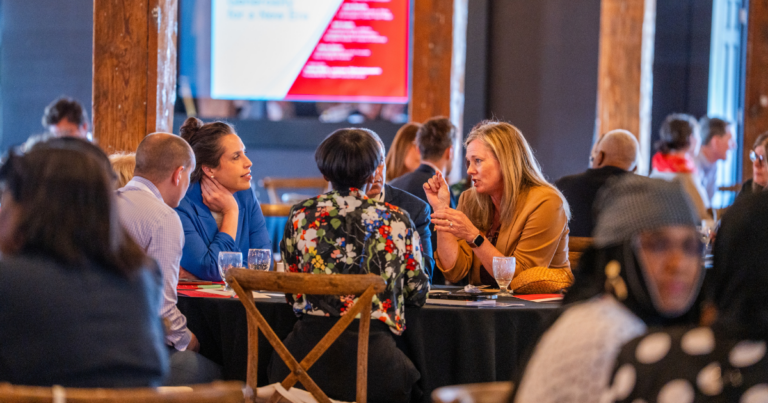
The event blended a shared TED Talk viewing with a moderated panel and small-group table discussions, creating a format designed less for “answers” and more for new thinking, fresh language, and ideas people can carry back into their work and communities.
The program opened with Licensee Neelay Bhatt speaking to the TED and TEDx ethos that “Ideas Change Everything”. Our Board Chair, Jasmine French, also shared CICF’s Strategic Direction, our pathways that seek to create regional leadership in philanthropy. This was followed by Chris Anderson’s TED Talk on “infectious generosity,” a concept that treats generosity not as a private virtue but as something that can spread when people see it, feel it, and believe it’s possible for them, too.
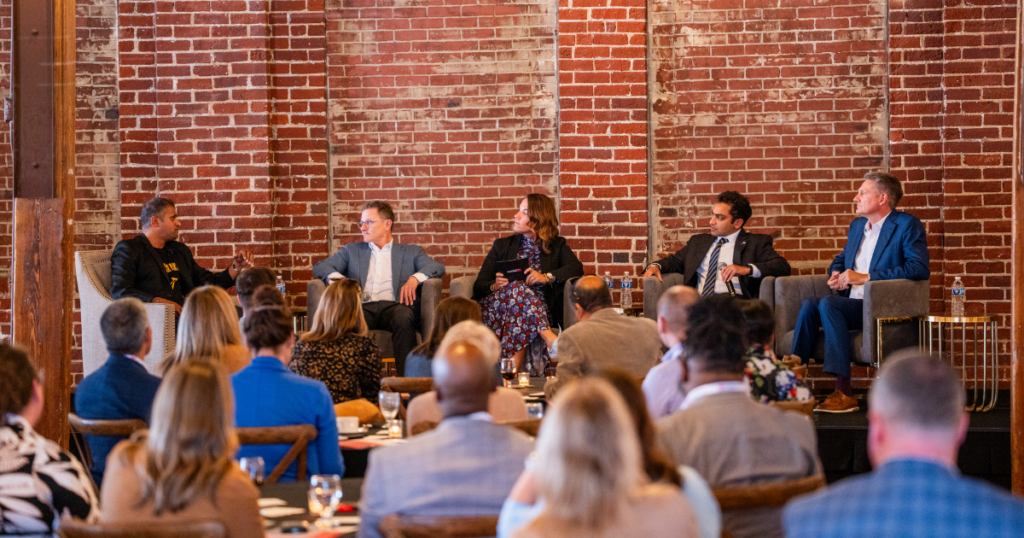
Panel Discussion
From there, a four-person panel built on the talk’s central premise: in a time when many systems feel strained, generosity remains one of the few forces that can move quickly across sectors, institutions, and neighborhoods.
Moderator Neelay Bhatt asked each panelist to share one big, transformative idea:
Jennifer Bartenbach emphasized that generosity is bigger than money. The future of philanthropy will depend on connectivity, partnerships, and broader ownership of community challenges, including clearer ways to translate shared data into shared action. She pointed to an Ohio example in which regional ALICE rates (Asset-Limited, Income-Constrained, Employed) are used across sectors to better address persistent challenges.
Alan Berube argued for bold, specific goals. He used the example of Community Solutions, a national nonprofit that set out to “end homelessness”. After achieving major reductions in homelessness in 13 U.S. communities, they now operate in 170.
Salil Gupta offered a historical lens on community infrastructure and connection. He invoked the painting Washington Street (Indy’s “down-home” answer to La Grande Jette) as a literal image of neighbor-centered development. He then pointed to Indiana’s world-class interurban network as an example of multi-sector, multi-region connectivity that still inspires nearly a century after its demise.
Steve Simon focused on human flourishing through mental health. He spoke to the idea that healing expands our capacity for generosity, and lauded recent federal efforts at innovation. He encouraged a broader toolkit for addressing mental health in the region, asserting that generosity is not only a response to community strain, it can be strengthened upstream by improving the conditions that help people thrive.
Major Stats and Reality Checks
Several data points grounded the discussion in the current landscape.
For example, in 2024 the U.S. saw record-setting philanthropy even as the share of total donor households continued to decline, meaning more giving is carried by fewer givers. The panel also returned to ALICE as an especially useful measure of regional opportunity and strain. In Central Indiana, 38% of households fell below the ALICE threshold in 2023, meaning that over 1 in 3 couldn’t afford the basics.
Finally, the discussion underscored a boundary that matters more as resources tighten: philanthropy is critical, but finite. Even at historic levels of giving, philanthropic assets cannot replace public-sector capacity at scale. That reality increases the importance of clarity about roles, expectations, and the kinds of challenges each sector is best positioned to address.
Attendee Takeaways
The table conversations reinforced a theme that came up repeatedly during the panel: people are hungry for a model of philanthropy that is more coordinated, less fragmented, and easier for nonprofits to navigate.
In response to the question, “What is one bold action that could redefine philanthropy in Central Indiana over the next decade?” two themes rose to the top: (1) enabling like-minded nonprofits to collaborate in ways that save money and reduce redundancy, and (2) reducing administrative burdens and “hoop jumping” throughout the grant process. Participants also pointed to trust-based philanthropy and multi-year grants as practical ways to strengthen nonprofit sustainability amid funding cuts.
When asked, “What is one way you can spark generosity in your personal life this summer?” many participants gravitated toward volunteering, especially with children and young people. Employers in the room also favored creating more authentic volunteer pathways through workplaces, allowing younger professionals an easy way to see and engage with the communities they live in and serve.
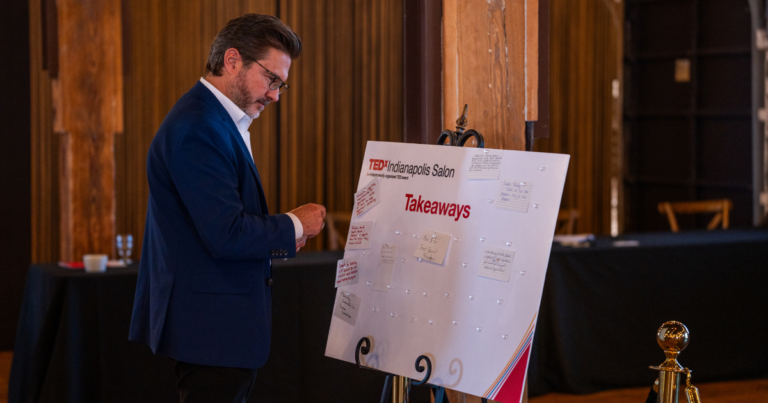
Participants were asked to write their takeaways on note cards. A few responses that stood out to us are:
- “What if we looked at philanthropy as a ‘kindness map’ to visibly show how generosity works across the region: who is giving, where you can help, and celebrate the small acts of generosity and large gifts?
- “Provide childcare to one struggling mom.”
- “Instead of a ‘Tupperware party,’ hold a ‘generosity party.’ Invite a group of friends for cocktails and discuss acts of generosity. Then challenge all of the guest to hold their own generosity party and pay it forward.”
- “Improved press/media coverage of philanthropy to shift the general population’s education and awareness of community and giving.”
- “Commit to hosting nonprofit leaders on our podcast that features brands making an impact.”
- “Streamline reporting requirements for grantees—using AI tools to make reporting and reviewing easier.”
What’s Next?
Across speakers and tables, all agreed that we are suddenly in a new era of Central Indiana nonprofit history.
The Salon didn’t attempt to “solve” philanthropy in an afternoon. Instead, it fulfilled its goal of offering up ideas, frames, and data benchmarks that can help shape how Central Indiana talks about generosity, not only during a moment of instability, but for years to come.
Related Stories