Jennifer Bartenbach: We need a clear way to know if we’re getting stronger
As originally published October 9, 2026 in the Indianapolis Business Journal.
This is part two of a two-part op-ed series. Part one, “We need clearly defined roles for Indiana’s public, private, and nonprofit sectors,” can be read here.
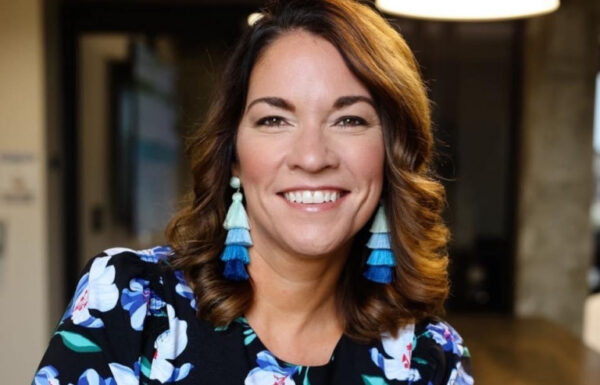
By Jennifer Bartenbach, CEO of CICF
In a previous column, I argued that the public, private, and philanthropic sectors in Central Indiana need a clearer understanding of the roles each plays in supporting strong communities.
But, once these roles are defined, how do we know if Central Indiana communities are actually getting stronger? Is it our budget savings? Our GDP? Our average lifespan? Our average wages? We need a clear way to answer the fundamental question, “Is what we’re doing working?”
Central Indiana Community Foundation (CICF) is exploring what it would take to create a data-driven progress report for our region. We are engaging community foundations in all nine Central Indiana counties and the nationally recognized San Diego Policy & Innovation Center to think through what a useful, credible resource would look like.
Such a progress report would give communities and all their stakeholders a more comprehensive way to understand where they’re making progress and where gaps remain.
The good news? We already have sources of information that would inform a more comprehensive understanding.
SAVI, for example, has spent years building a rich source of regional and neighborhood-level data, as has The Richard M. Fairbanks Foundation. United Way of Central Indiana’s ALICE metrics provide an indispensable picture of household health in our region. And the Indy Chamber’s Accelerate Indy 2030 is bringing together partners around a vision for increased talent attraction and economic growth.
The opportunity is not to create another data platform, but to bring the best of what already exists into a shared framework that helps communities understand whether we are collectively making progress.
Clearly, many of us have come to realize that the prosperity of a state or region is not primarily reflected in a balance sheet.
True, Indiana has always been a state that values fiscal discipline – our constitution has one of the oldest, strongest debt limits in the country. Those strong reserves are important; we absolutely should be prepared for downturns, emergencies, and unexpected needs.
But what if we held a community balance sheet in equal esteem?
What if we brought our fiscal and business acumen to bear on a limited number of indicators that matter to regular people: housing availability, childcare access, educational attainment, health outcomes, workforce participation, infrastructure quality, and other non-fiscal measures?
To be clear, this isn’t a call for more spending. Furthermore, not every county would or should utilize data to pursue identical strategies. Instead, this is a call for a better understanding of how our own sector’s role contributes to our region’s overall goals.
Without an awareness of the larger context, a given sector’s activity may be recognized as a success when the larger picture shows the opposite.
For example, a government can successfully balance a budget by cutting childcare voucher funding; childcare nonprofits can successfully absorb those cuts by reducing services and increasing appeals to donors; donors can successfully shift their grants to cover these reduced budgets; and a business can try to address an area’s reduced childcare access by offering employees additional unpaid family leave.
Here, everyone individually did what they were supposed to, and yet, a working household now has less access to childcare, and their only new option is more unpaid time off work. Will that be feasible for parents? Was this every sector’s ultimate goal? Was there a goal?
Instead, let’s make it as easy as possible for each community and each player to connect the dots between their activity and the larger function they serve in Central Indiana.
Again, these shared goals and context do not require centralized decision-making. Every county in Central Indiana has a different economy, culture, political context, and set of assets. A regional framework does not tell communities how to solve problems. It merely gives everyone the information and context they need to make the most strategic decisions for better outcomes.
As we see from the data resources I cited above, we are not short on the information to fuel better strategies. What we often lack is a common understanding of whether all our successful activities add up to progress.
Defined roles tell us who is responsible.
Shared goals tell us what we are trying to accomplish.
A community balance sheet can help tell us how to get there.
About the Author
Jennifer Bartenbach is the CEO of Central Indiana Community Foundation (CICF). Since becoming CICF’s first dedicated CEO in July 2023, she has led the development and launch of the community foundation’s first strategic plan, which sets a vision for Central Indiana to become the most connected, philanthropic and impactful region in the nation.
Prior to becoming CEO, Jennifer served ten years as CICF’s Chief Financial Officer and Chief Operating Officer, overseeing operations and the stewardship of charitable assets. She also founded and continues to lead IMPACT Central Indiana, which uses low-interest loans and other investments to support businesses, nonprofits and community projects.
Before joining CICF, Jennifer spent eight years at the Indianapolis Museum of Art, now Newfields, including four as CFO and one as interim CEO. She holds a BS in accounting from the University of Evansville and an MBA from Ball State University. Indianapolis Business Journal recognized Jennifer as CFO of the Year in 2021 and named her to the Indiana 250 in 2025.
Continue the Conversation
We’d love to hear your questions, ideas, and feedback. Use the form below to send us a message, ask a follow-up question, or share what resonated with you.