
Jennifer Bartenbach’s Annual Update: the Discipline of Collaboration
Three years ago, when I stepped into the role of CEO of Central Indiana Community Foundation, I believed that traditional philanthropy would have to evolve to meet the complex needs of our communities.
I am only more convinced of that stance today.
In my first two annual updates, I wrote about achieving that evolution through greater collaboration and what that would look like at CICF. Over these three years, what has changed is not my belief in collaboration, but my understanding of what it actually requires.
Central Indiana has the talent, generosity, nonprofit leadership, and civic infrastructure to become one of the most connected and impactful regions in the country. What has become clearer is the discipline required to get there.
We Already Live Collaboratively
People work, worship, go to school, give, volunteer, and receive services across county lines. Our experience of the region is fluid.
But too often, our funding, planning, data collection, and decision-making are not organized that way. This results in an unnecessarily segmented and competitive environment.
However, when our sectors do work together across communities, the mutual benefits are obvious. You can see this clearly in the Greater Indy Trailways.
With the B&O now reaching from rural Hendricks County, through Speedway and into Downtown Indianapolis, its value skyrocketed. Providing a continuous bike and pedestrian pathway across dozens of towns and hundreds of destinations, regardless of boundaries, not only supports Hoosier health and recreation but also enhances safety, economic development, air quality, and our sense that no community is too small to be included in the region’s infrastructure.
That did not happen by accident! It required discipline and a years-long effort of shared planning, long-term investment, and multiple meetings with partners across sectors who understood that regional assets need regional commitment.
Easier Said Than Done
This sort of collaboration, especially across counties, is difficult. Housing is a prime example. Leaders agree that Central Indiana needs enough housing for people to live near work, school, and opportunity.
But this basic need is understood differently in different communities. In one place, the conversation may center on affordability. In another, it may center on seniors, or young families, or density, or transit access. Even the words we use can carry different meanings in different areas.
To cut through misunderstandings, we can draw on measurable data and clearly defined goals among partners.
We can answer specific questions such as, “How many more homes does a community need to satisfy demand?” or “What are the economic realities facing area households?”
When we better understand what each area is trying to protect, solve, or build, our collective response is more effective.
Broadly, I do believe communities share basic goals around prosperity for our homes and neighborhoods. So, let’s start there. And when the conversation becomes complicated, let’s stay at the table and remember what we’re there to do.
CICF’s Role and Growing Urgency
That “table” is where I see a lot of CICF’s value. What we do goes well beyond the dollars we steward. It is the trust we hold, the partners we connect, and, increasingly, the infrastructure and services we provide to regional nonprofits.
Connecting communities and donors to effective nonprofits is why we’re here, so it is important CICF does all it can to help more nonprofits become more effective.
Something I’ve learned in my 13 years in this sector is how important the systems behind philanthropy and nonprofits are: Finance, human resources, legal, grants, scholarships, donor services, data collection, marketing, and advising may not always be visible externally, but they’re essential to making philanthropy effective and trustworthy. It all allows donors to give confidently. It allows charities to focus on their mission. Most importantly, it turns generosity into better community outcomes.
Believe me, that infrastructure will matter even more in the years ahead. Historically, the nonprofit sector is one of the most trusted institutions in the nation. And yet, while it is essential, it is currently under tremendous pressure.
Intended or not, major cuts to government services require nonprofits to solve more complex problems with fewer resources. Additionally, they are navigating workforce challenges, funding uncertainty, and understandable donor fatigue.
And not to pile on, but recent studies show economic downturns tend to reduce not only charitable giving but also volunteerism – and that holds across the economic spectrum.
I believe the sector is changing faster than many organizations are prepared for. CICF is committed to helping more nonprofits and the communities they serve build the capacity, partnerships, and even the courage they’ll need to outlast an era of volatility.
Future Focused
I’m not breaking news when I say that trust in institutions is low. The nonprofit sector – still among the most trusted – can play a unique role. CICF can motivate people from across a connected region to come together – yes, with different perspectives, roles, and circumstances – and push forward the goals that can benefit every household.
Our region has what it needs: generous people, strong civic institutions, creative nonprofit leaders, committed donors, and communities that care deeply about their future.
The question is whether we can organize our assets in a way that is connected, durable, and effective.
Three years in as CEO, I am determined that CICF becomes known not simply as a place people give through, but as a place helping more residents to better understand and serve Central Indiana.
To be sure, our region’s future will not be shaped by any one organization, city, county, or sector. Instead, I believe it will be shaped by our willingness to work together.
Because of the roles philanthropy and nonprofits can play, CICF is committed to being a trusted partner, connector, capacity builder, and a steward of possibility.
That is the work ahead of us and the discipline required for effective collaboration.
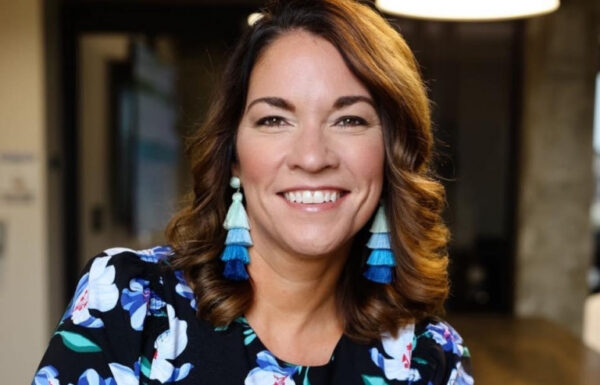
Continue the Conversation: Email Jennifer
We’d love to hear your questions, ideas, and feedback. Use the form below to send a message to Jennifer, ask a follow-up question, or share what resonated with you.