Q&A: How Six Nonprofits Approach “Storytelling”
By Diana Coyle, CICF Director of Nonprofit Services & Sustainability
 How can a nonprofit tell its story in ways that raise awareness, strengthen fundraising, and help the community clearly understand its mission?
We put these and other messaging questions to five Central Indiana nonprofits, as well as CICF’s own in-house writer: Family Promise of Hendricks County; Joy’s House; Leadership Johnson County; The Milk Bank; and NexTech. They weighed in on everything from what makes for effective storytelling, how to simplify complex operations for a general audience, making time for meaningful communication without a dedicated comms staff, writing tips, and more.
Note: some responses have been edited for length.
Click each nonprofit’s name below to jump to their answers.
- Family Promise of Hendricks County
- Joy’s House
- Leadership Johnson County
- The Milk Bank
- NexTech
- Central Indiana Community Foundation
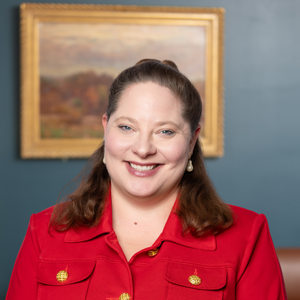
Family Promise of Hendricks County: CEO Jenni Crago
 Family Promise offers emergency and long-term housing solutions to residents of Hendricks County. Additionally, their clients receive legal assistance, career advancement services, and access to a Resource Hub, complete with laundry, shower, phone, and internet.
Family Promise of Hendricks County does a lot. How do you tell your story in a way that helps people quickly understand the full scope of your work without overwhelming them?
We have a core message: We help families find and keep a safe place to call home.
From there, we group our work into three clear areas—prevention, shelter, and long-term stability. Instead of overwhelming people with everything we do, we explain how a family might come to us facing eviction, how we work to prevent that crisis if possible, what happens if they do lose housing, and how we continue walking alongside them even after they’re rehoused to ensure lasting stability.
What has helped people in Hendricks County better understand who you are and what you do?
Lasting impact only happens when we are deeply connected to the community we serve. That means showing up at local events, building relationships with leaders, and listening to families, partners, and stakeholders. It allows us to stay responsive and ensure our services are aligned with actual needs, not just what we assume those needs are.
Without a dedicated marketing person, how do you make storytelling part of your work?
With a small team, we focus on simple storytelling that’s integrated into our day-to-day work. For example, our staff already interacts with families every day. We encourage them to capture small moments, themes, or successes as they happen—nothing formal, just quick notes or highlights that we can later turn into stories.
Additionally, as CEO, I encourage all staff to attend meetings, present at community forums, attend events and conferences, etc. Involving everyone in this way helps to greatly expand our reach.
Joy’s House: Noah Taylor, Advancement Manager
 Now with two Indianapolis locations, Joy’s House offers adult day services for aging adults and those with life-altering diagnoses. They also offer many support services for caregivers. With their own social media platform and radio show, Joy’s House utilizes various media channels.
Many people don’t realize they need your services until they’re in crisis. How do you tell your story in a way that builds awareness before that moment?
Our radio show, Caregiver Crossing, airs weekly and brings in doctors, elder law attorneys, and other trusted voices to talk through real questions caregivers are facing. It gives people information early, often before they even realize they are stepping into a caregiving role.
Our social media platform, Caregiver Way, offers education and connection online, and CARE Kits help families organize important information when things start to feel overwhelming.
What kinds of stories have led people to take action, whether that’s seeking services, donating, or getting involved?
Our regular Guest Wish Days are a strong example of that. We take time to understand what is important to a Guest and build a day around it. One of those days belonged to Mr. Cleo. Joy’s House was prepared with the things he loves. A private chef brought the chicken he always enjoys. His favorite music was played. A wrestling tribute recognized the years he spent on the mat at the University of Indianapolis. He arrived in a sharp suit with his Hall of Fame ring shining while his wife stayed close and shared the afternoon with him. Seeing our attention to that level of detail helps people understand what it means to be known here.
How do you make storytelling a consistent part of your work when time and capacity are limited?
If we are hearing the same question come up again and again, whether it is about memory changes, stress, or what to do next, then we know that is something worth sharing. That keeps our storytelling relevant and rooted in what people actually need.
We also work with student groups to capture moments at Joy’s House, like our partnership with Butler University. It gives us additional capacity while also bringing in new perspectives on how stories can be shared.
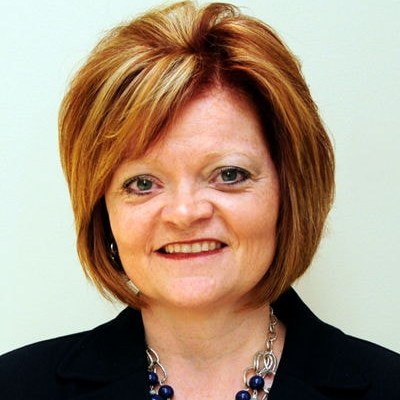
Leadership Johnson County: Tandy L. Shuck, Executive Director
 For more than 30 years, Leadership Johnson County has been bringing together individuals from across sectors—business, nonprofit, education, and government—and helping them understand not just how to lead, but where their leadership is needed most.
How do you tell your organization’s story in a way that helps people quickly understand your core functions?
We start with one clear idea: Leadership Johnson County develops leaders who strengthen our community.
From there, we quickly answer three questions:
-
- What we do: we bring people together through leadership programs that build skills, deepen community awareness, and inspire action.
-
- Why it matters: Strong communities are built by people who are informed, connected, and willing to lead. When leadership is stronger, nonprofits are more effective, businesses are more engaged, and communities are more resilient.
-
- Why people should care: Good leadership creates a positive ripple effect, touching workplaces, schools, and neighborhoods. So whether our donors participate, partner, or invest, they are helping shape the future of Johnson County.
How do you make storytelling a part of your work when time and capacity are limited?
One of the most effective strategies for us has been recognizing that we are not the only storytellers—our 1,000+ Signature Program graduates are also excellent storytellers.
By creating opportunities for them to share their experiences—through spotlights, panels, testimonials, or even casual conversation—we’re able to extend our storytelling far beyond our staff capacity.
We also focus on capturing stories in real time at events. That could be taking a photo, jotting down a meaningful quote, or asking a participant one quick reflection question. These small moments add up and give us authentic content we can use again and again.
Another key is to repurpose everything. One story can become a newsletter feature, a social media post, a sponsorship example, and a talking point in a meeting. By getting multiple uses out of a single story, we maximize impact without adding more work.
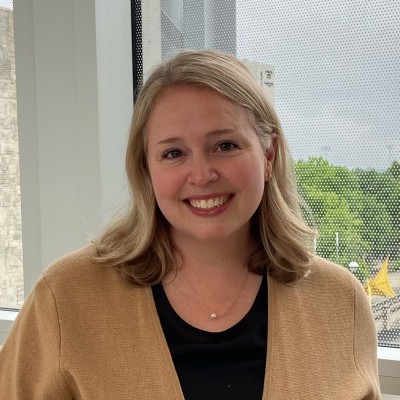
The Milk Bank: Lisa Busse, MA, CFRE, Head of Advancement
 Indiana has long struggled with an elevated risk of pre-term birth and infant mortality. For two decades, the Milk Bank has provided families of every background with donated breastmilk, enabling more newborns to celebrate their first birthday.
Which stories move people to action, whether it’s donating milk or giving financially?
We know it’s painful to imagine an infant being in a precarious healthcare situation, especially one that’s life-threatening. Our audience finds success stories after intervention very compelling.
For example, as part of our largest annual fundraiser, Fund an Ounce, we revisited Breck and Declan a decade after they received donor breastmilk through The Milk Bank. Their story was incredibly compelling across social media, with one of their YouTube shorts receiving five times the average views of our stories. We consistently see follow-up stories like this to be incredibly engaging with our audience.
How do you simplify complex or clinical information without losing accuracy or trust?
The overarching persona of our organization’s voice is “your best friend is a neonatologist.” If that were true, they’d give you the very best in current, sound science but ground it in language and action that is accessible.
Most importantly, as a friend, they’d value your relationship, support your decisions, and trust that you are making the very best decision for your child. Here’s how we do that:
-
- We limit jargon and focus on short, digestible messages.
-
- We prepare explanations of varying length depending on the audience and time allowed.
-
- We focus on answering what was asked, rather than sharing everything we know.
-
- We utilize imagery, media, and charts to allow for storytelling that spans literacy.
-
- We provide sources and citations if desired.
-
- We focus on what’s best for baby and reframe stigma or shame by avoiding excluding or judgmental language.
How do you make storytelling a consistent part of your work when time and capacity are limited?
One story can turn into multiple quotes, images, blogs, and videos using tools like Content Lab, an AI-powered platform that uses your video for social snippets, blogs, transcripts, and more. We can then turn one 30-minute video recording into six months’ worth of content that aligns with our overall communications plan with minimal editing or manual work.
NexTech: President Karen Jung
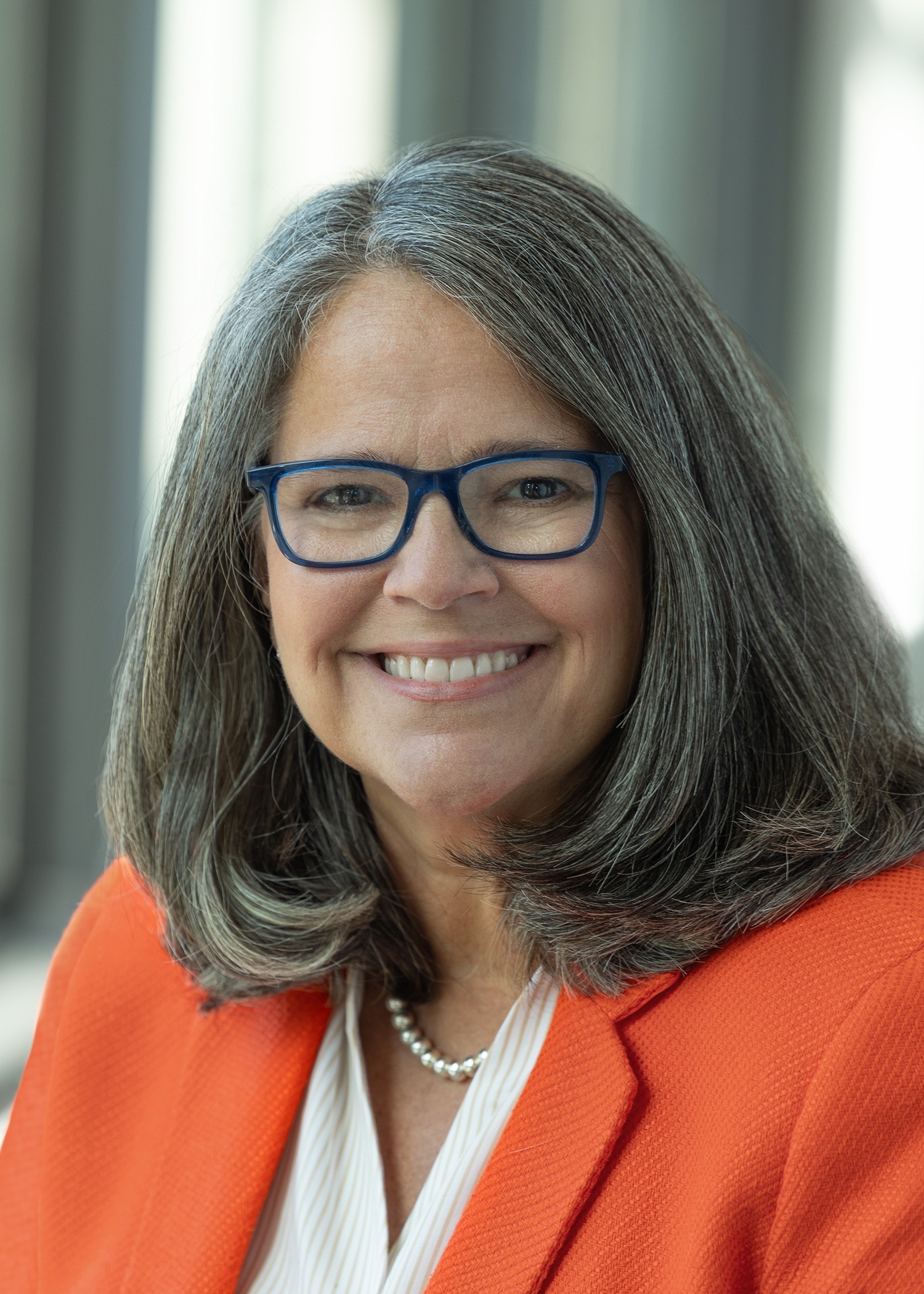 In a social and professional world increasingly reliant on advanced technology, NexTech provides greater access to computer science training and education for K through 12 students in Indiana.
What led you to prioritize storytelling in your new website, and what goals were you trying to achieve?
We realized that simply listing programs and statistics didn’t fully communicate why our work matters or who it’s for. Storytelling allowed us to put people—students, educators, and communities—at the center of our narrative. Our goal was to help visitors quickly understand our purpose, feel an emotional connection to the work, and see how computer science and AI education can create real, tangible opportunities.
How do you decide which stories to feature?
The most effective stories clearly show a challenge, the Nextech intervention, and the resulting growth or opportunity—whether that’s a student discovering a new career path or a teacher gaining confidence in teaching computer science. We also aim for variety so visitors can see themselves reflected in our work, across different grade levels, communities, and learning environments.
How do you use student or educator stories to make your work feel more concrete and relatable?
Instead of abstract language about “access” or “impact,” we highlight specific moments—what a student created, how a teacher’s classroom changed, or the confidence someone gained. These stories help visitors understand not just what we do, but what it feels like to be part of Nextech. They turn big ideas like equity and opportunity into something personal and human.
How do you decide where to tell your stories so that they reach the people you care about?
Our website is the foundation—it’s where people go to understand who we are—but we extend those stories through channels like email, social media, and presentations, depending on who we’re trying to reach. Educators may encounter our stories on LinkedIn or in newsletters, while funders might see them in impact reports or one-on-one conversations.
CICF: Greg O’Neill, Marketing & Publications Officer
 CICF is the community foundation for Central Indiana. It helps people give to the causes they care about and supports nonprofits so they can do their work more effectively.
What if nonprofit staff do not feel like “writers?” How can they get started communicating clearly?
AI is not quite ready to do our homework for us, at least not at an A-plus level. So, while I still use it for things like intros, conclusions, or email subject lines, I find it needs plenty of editing for more substantial assignments.
That said, when skillfully prompted, AI can give you something usable to edit.
But that still means you have to do some of the work! Luckily, there are four things even professional writers can do to make the process easier.
First, before writing or going to AI, the most important thing you can do is organize your thoughts about what you want to say. Even just to answer this question, I shoved my keyboard aside and thought for a minute.
Next, don’t spend a lot of time on a first draft, especially for longer pieces. No edits, no shame – just get something down and cross the finish line.
Then, take as much time as you can to revise. The idea of multiple drafts may seem like drudgery, but I promise it will be easier (and better) in the long run. The cliche is true: writing is rewriting.
Finally, have a text-to-speech app read your work back to you. They say writers are their own worst editors, but something in our critical mind activates when we listen. Awkward, confusing, or ungrammatical phrasing is much easier to pick out and fix.
Oh, and a bonus tip: Read for fun! It really doesn’t matter what it is – fiction, non-fiction, books, blogs – so long as it is clear and engaging, it will help you more than anything else I’ve mentioned.
Continue the Conversation: Email the Author
We’d love to hear your questions, ideas, and feedback. Use the form below to send a message to the author, ask a follow-up question, or share what resonated with you.