Jennifer Bartenbach: We need clearly defined roles for Indiana’s public, private, and nonprofit sectors
As originally published May 1, 2026 in the Indianapolis Business Journal.
This is part one of a two-part IBJ op-ed series. Part two, “We need a clear way to know if we’re getting stronger,” can be read here.
By Jennifer Bartenbach, CEO of CICF
Indiana has long embraced a governing philosophy rooted in a relatively small public sector. Many Hoosiers value that approach because it creates flexibility and allows individuals, businesses, and communities to direct resources toward the causes and priorities they value most.
This model has its advantages. But it depends on something that’s easy to overlook: a strong, well-supported nonprofit sector and a shared understanding of how responsibilities are divided across society.
Today, as federal resources tighten, state priorities evolve, and local governments face increasing pressure, Indiana is confronting a question that can no longer be avoided: Who is responsible for what.
The scope of the nonprofit sector
After a global pandemic and recent budget reductions, greater need and greater responsibility have increasingly shifted toward nonprofits and philanthropy. At the same time, economic disruptions have placed real pressure on basic needs such as housing, food security, childcare, and household stability.
These are circumstances often far beyond the control of individual families.
In our region, it can be tempting to assume nonprofits will simply fill these gaps. After all, Central Indiana is a nonprofit and philanthropic epicenter, home to nearly 20,000 organizations, many of which provide the kinds of human services that alleviate the worst of the above impacts. Statewide, 460,000 Hoosiers are employed by nonprofits.
But size alone is not enough. Even a sector this large cannot indefinitely absorb growing public needs without a clearer understanding of where nonprofit responsibility begins, where government and business responsibilities remain, and how all sectors should work together.
Let’s start with some basics around our sector’s commonly misunderstood financial structure.
What “nonprofit” actually means
Like any enterprise, nonprofits must pay staff, manage facilities, invest in technology, comply with regulations, and plan for the future. That requires revenue and long-term discipline.
Unlike for-profit companies, though, nonprofits generate revenue through donations, grants, earned income, sponsorships, and government contracts.
What makes us “nonprofit” is our legal mandate that all surplus revenue gets reinvested into our mission rather than distributed to owners or shareholders . For us, community members are the shareholders.
Despite that model, nonprofits must now absorb growing community needs without a readily apparent way to grow operating resources, workforce, or long-term capital.
For some, philanthropy is viewed as the answer to that funding gap.
Philanthropy does play an essential role in Indiana. It can be targeted, responsive, innovative, and collaborative. It can invest where public systems cannot or will not. It can bring partners together and help launch new solutions.
But, philanthropy was never designed to become the permanent payer of last resort.
When we expect charity to underwrite reductions in public investment, we create a fragile model that relies on donor preference rather than broadly supported policy.
That uncertainty affects nonprofit organizations, business leaders, civic leaders, and residents alike.
The right tool for the job
So, what would a clearer division of labor look like?
Generally, it would mean each sector being right sized for the challenges it is best positioned to address.
The federal government helps establish a baseline of stability and opportunity, especially in housing, food, healthcare, and the environment.
State government supports education, workforce readiness, and statewide economic development.
Local governments focus on implementation, infrastructure, public safety, and quality of place.
Businesses create jobs, invest in talent, and strengthen communities through growth and partnership.
Nonprofits fill gaps, respond to emerging needs, and serve neighbors with trust, proximity, and compassion.
Philanthropy catalyzes new ideas, bridges funding gaps, and improves already-functioning systems.
Individuals contribute through civic engagement, volunteerism, charitable investment, and care for one another.
Whatever arrangement we choose, every sector can function better when it clearly understands its role.
The Central Indiana advantage
With responsibilities clearly defined, our region offers unparalleled talent, generosity, and research capacity to maximize our collective impact.
We’re home to the first-of-its-kind Lilly Family School of Philanthropy, the number-one-ranked O’Neill School of Public and Environmental Affairs, and the Polis Center research and data hub. Together with strong employers, civic institutions, and generous residents, these assets form a uniquely capable regional ecosystem for good.
To be clear: Indiana can absolutely continue to choose smaller government. But smaller government works best when the surrounding systems are strong and their responsibilities are well defined. Otherwise, individuals and entire communities can too easily fall through the cracks.
That means stronger nonprofits, steadfast philanthropy, engaged business leadership, and honest accountability about who is responsible for what.
If we want Central Indiana to remain competitive, compassionate, and resilient, now is the time to define our responsibilities clearly and support the institutions that make our model possible.
About the Author
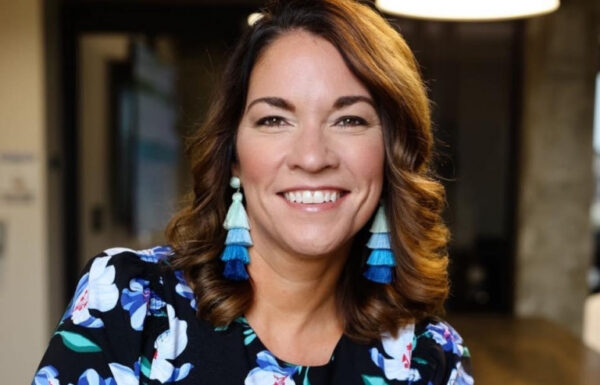
Jennifer Bartenbach is the CEO of Central Indiana Community Foundation (CICF). Since becoming CICF’s first dedicated CEO in July 2023, she has led the development and launch of the community foundation’s first strategic plan, which sets a vision for Central Indiana to become the most connected, philanthropic and impactful region in the nation.
Prior to becoming CEO, Jennifer served ten years as CICF’s Chief Financial Officer and Chief Operating Officer, overseeing operations and the stewardship of charitable assets. She also founded and continues to lead IMPACT Central Indiana, which uses low-interest loans and other investments to support businesses, nonprofits and community projects.
Before joining CICF, Jennifer spent eight years at the Indianapolis Museum of Art, now Newfields, including four as CFO and one as interim CEO. She holds a BS in accounting from the University of Evansville and an MBA from Ball State University. Indianapolis Business Journal recognized Jennifer as CFO of the Year in 2021 and named her to the Indiana 250 in 2025.
Continue the Conversation
We’d love to hear your questions, ideas, and feedback. Use the form below to send us a message, ask a follow-up question, or share what resonated with you.